Before the Service Counter: How Public Enquiries Found Their Way In
Public enquiry counters reveal how residents approached local offices, and how architecture, paperwork and staff roles shaped the experience of seeking help.
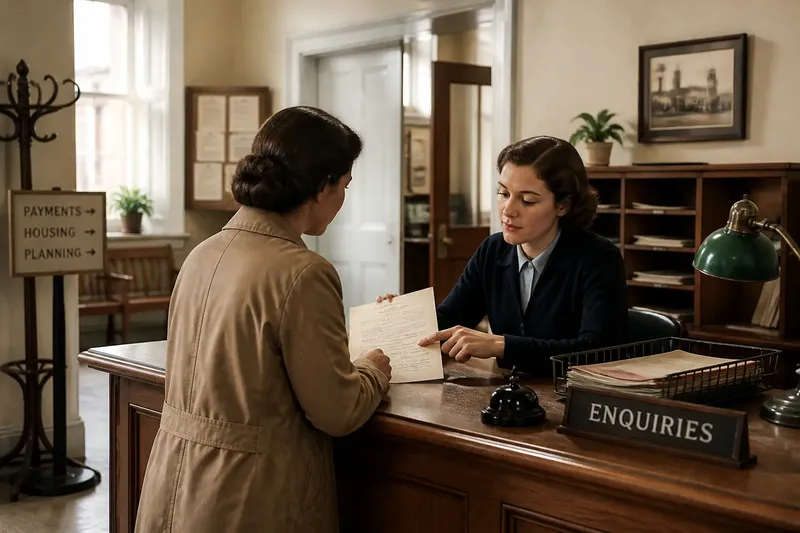
A municipal counter gave residents a visible place to begin, but its history varied from one town and office to another. Public enquiry counters are best understood not as a single national system, but as one arrangement among the desks, clerks, meetings and letters through which residents sought answers.
Without a particular place and period, broad claims about when counters appeared or how they spread are difficult to pin down. What can be described more carefully is the work such a point of contact was designed to do: make an office approachable and connect a resident’s question to someone able to handle it.
A public entrance made an unfamiliar office easier to approach
In a municipal building, a reception desk or enquiry room could give visitors a recognizable first stop. A person did not need to know the authority’s internal structure before asking where a matter belonged.
The arrangement was also physical. Signs, a public waiting area and a desk set apart from staff workspaces helped distinguish the visitor’s route from the office’s back rooms. Those features did not settle a question, but they could make the first encounter less uncertain.
Earlier or less formal arrangements might involve writing to a clerk, approaching an official, or raising a concern at a public meeting. Which route existed depended on the local institution and the matter at hand; it is safer to describe these as possible forms of contact than as a universal sequence leading to the modern counter.
Reception staff connected everyday language with office responsibilities
Residents rarely arrived speaking in an authority’s filing categories. They described what had happened: a document was missing, a payment was unclear, or something in a public place needed attention. A clerk or receptionist might ask for the location, the relevant letter, or the name of the service before directing the enquiry.
That work could be useful even when the staff member had no authority to decide the issue. A counter might answer a routine question directly, accept a form, or refer a visitor to a specialist; those are different functions, and clear communication helped residents understand which one had taken place.
Say a resident arrives with a notice about an unfamiliar permit and no idea which office issued it. The clerk reads the department name on the notice, checks the building directory, and points the resident to that office, where the notice can be discussed with the responsible staff. The expected result is a more specific next conversation, not a decision by the receptionist about whether the permit should be granted.
The counter’s design reflected the limits of a public conversation
A busy desk could handle directions and brief questions, but it was not suited to every subject. A complaint involving private circumstances, for example, could require a quieter space or a direct appointment rather than a conversation within earshot of a waiting room.
Paperwork shaped the encounter too. A written request could preserve the resident’s account, while a form might ask for details in the categories the office used. The practical question was whether the form made those categories understandable or left the visitor guessing about what to include.
Office layout also determined what a visitor could see and do. A clear sign might lead to the right desk; a locked door or a department name unfamiliar to the public could make the same building feel harder to enter. These observations describe how access could work, not a claim that every municipality used the same design.
What do the historical details help explain?
Was a reception counter the same as a decision-making office?
Not necessarily. Reception could provide directions, accept information or connect a visitor with a specialist, while an authorized officer handled the actual decision.
Why did written requests matter?
A letter or completed form could put a resident’s account into a durable record for the office to consider. Its usefulness depended on whether the resident knew where to send it and what information the office needed.
Did every local office have a public counter?
There is no basis for treating one arrangement as universal across places and periods. Residents’ routes depended on the particular authority, its building, its staff and the service involved.
What can a building layout tell us about public access?
It can show where visitors were expected to enter, wait and ask for help. A visible desk suggests a designated reception point, though it does not by itself reveal how well enquiries were handled or who had authority to act.
Local records can anchor a more precise account
Anyone tracing the history of a particular enquiry counter can start with evidence tied to the place: municipal building plans, council minutes, directories, photographs, local newspapers and surviving forms. A plan may show where a public desk sat; a council minute may explain a proposed change; a photograph can record signage or room layout without revealing how staff handled every enquiry.
These sources answer different questions. A directory can identify an office’s stated responsibilities, while a resident’s letter or a newspaper report may show how a particular person encountered it. Reading them together helps separate an official arrangement from the experience of using it.
Imagine a local archive holds a dated photograph of a reception desk and a council minute discussing a building renovation. The photograph shows where visitors were directed, and the minute explains that the entrance was being reorganized; together they support a claim about that building at that time, but not a claim about every town office.
The counter’s history belongs to the place that used it
A public enquiry counter was more than furniture: it marked a point where an institution met its visitors. Yet its meaning depended on the building, the staff and the local services behind it, so a careful history begins with evidence from a named place rather than a sweeping timeline.
For a resident or local historian, the most revealing traces may be modest—a sign in a photograph, a room labeled “reception” on a plan, or a form that tells visitors which details to provide. Such evidence can show how an office asked the public to approach it, while leaving room for the fuller story to emerge from local records.